


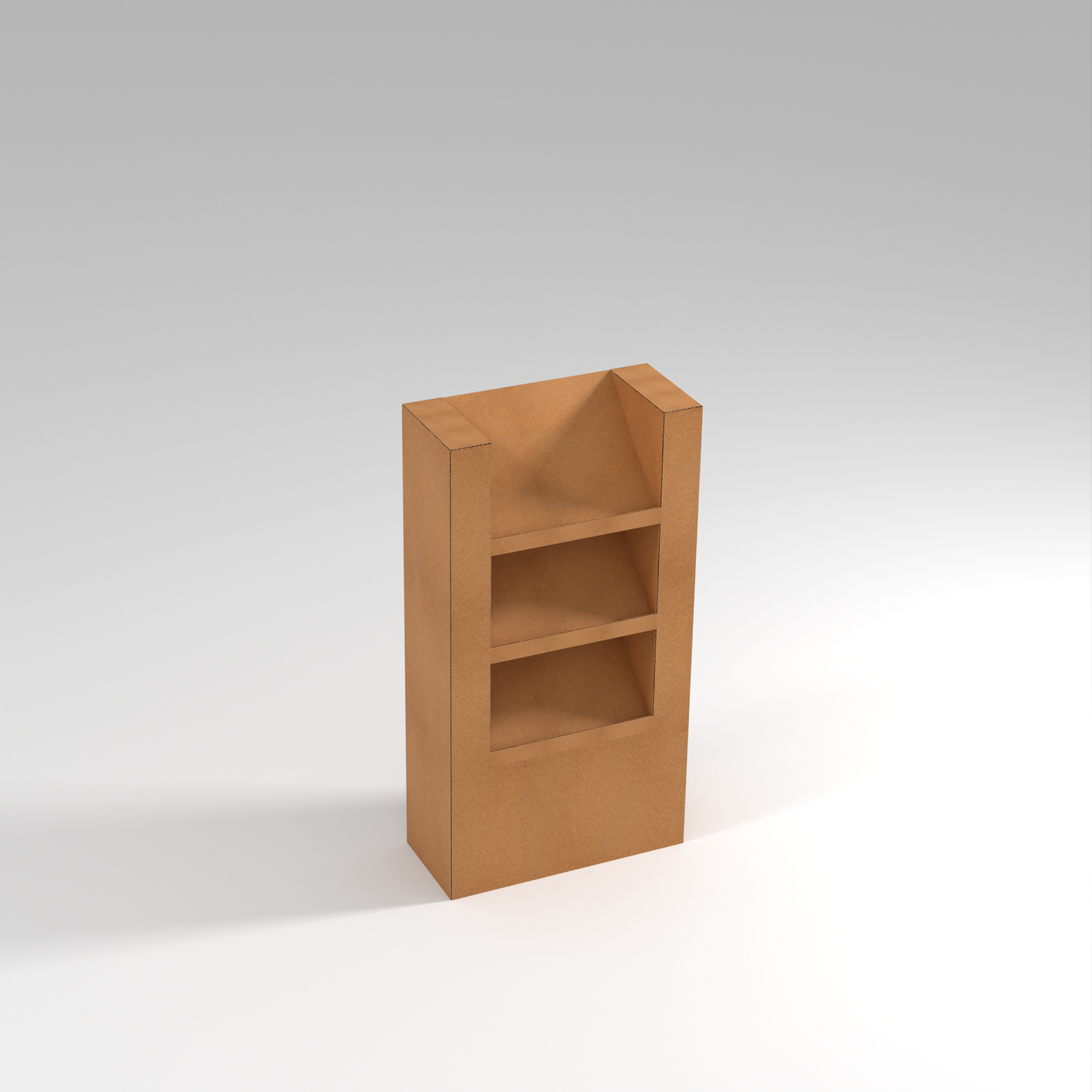


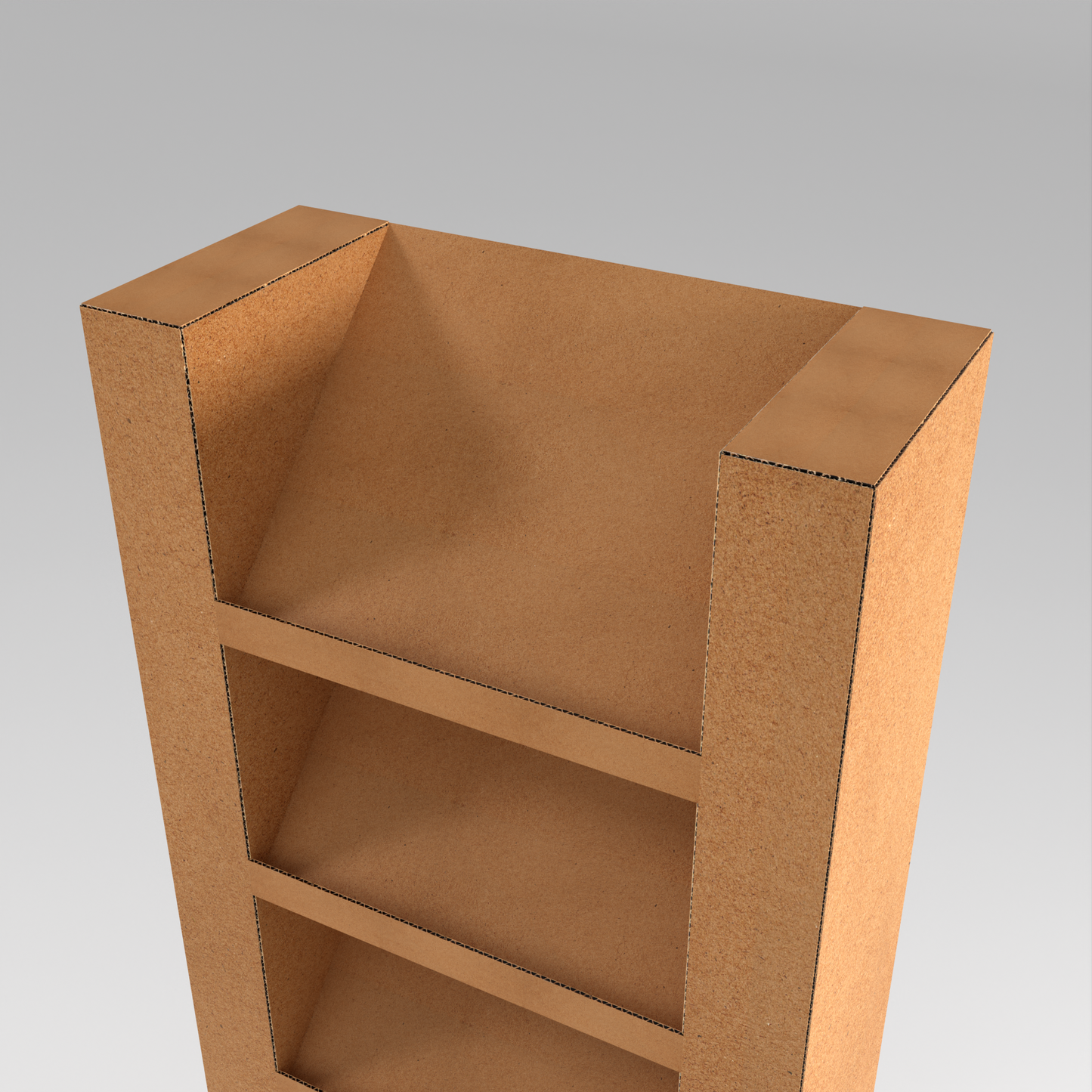
This cardboard magazine rack uses angled slatted shelves to hold brochures, pamphlets, catalogues or magazines so they’re easy to see, pick up and interact with.
It works well in environments where you want information to be visible but still aligned with the overall design of the build.
You’ll often see it used in exhibitions, trade shows, retail environments, foyers, and branded activations where there’s a mix of physical content and spatial design.
How the Magazine Rack Works
The structure is made from layered cardboard panels that lock together to form a stable, freestanding unit.
Each shelf is slightly angled, which helps printed materials sit forward and stay visible rather than flattening out or getting lost. The slatted design also reduces weight while keeping the structure strong enough for repeated use across events.
There are two common configurations:
- 3 shelf rack for lighter use or tighter spaces
- 6 shelf rack for higher volume areas or when you have multiple pieces of content to display
Because it’s lightweight, it’s easy to move around during bump-in or reposition throughout an event if needed. It can also be packed down and reused depending on the project.
Customisation and Branding Options
Visual finish and branding
The rack can be finished in a range of ways depending on how visible you want it to be within the space.
- Full colour print across side panels or back panels
- Subtle branding with logos or messaging
- Natural cardboard finish for a softer, low-impact look
- Graphic treatments that align with surrounding walls or structures
Form and structure
While the 3 and 6 shelf versions are the most common starting points, the design can be adjusted.
- Wider or narrower formats
- Taller or shorter units depending on reach and accessibility
- Integrated headers or signage panels at the top
- Multiple racks designed as a grouped display system
Integration into larger builds
This is where it becomes more than just a standalone piece.
The rack can be designed to sit within a larger cardboard environment like a wall system, retail display, or exhibition stand so everything feels connected rather than separate elements placed together.
Sustainability
This design is made primarily from responsibly sourced cardboard, which means it can be recycled at the end of its life or reused across multiple events.
Because the material is lightweight, transport has a lower impact compared to traditional display furniture, and installation is simpler with fewer heavy components.
A lot of clients are looking for ways to reduce event waste without compromising how their space looks or functions. Pieces like this help bridge that gap by offering something practical that still aligns with broader sustainability goals.
Being part of a wider shift in how events are designed and delivered matters more than ever. Businesses are increasingly expected to consider their environmental and social impact, and working with materials like cardboard is one way to move towards that in a tangible way.
Ideal Applications
This style of rack works well anywhere printed material is part of the experience.
- Trade shows and exhibition stands
- Brand activations with take-home materials
- Retail displays featuring catalogues or product info
- Event foyers or entry spaces
- Workshops or education spaces with handouts
- Gallery or museum environments
- Information points within larger installations
It’s especially useful when you want printed material to feel integrated into the design rather than sitting on a table or tucked away.
FAQs
How strong is the magazine rack?
It’s designed to comfortably hold stacks of brochures, catalogues and magazines across each shelf. The internal structure distributes weight so it stays stable during use.
Can it be reused?
Yes. Many clients reuse these across multiple events, especially when branding is kept minimal or updated with new skins or panels.
Can it be shipped interstate?
It can. The lightweight nature of cardboard makes transport easier and more cost effective compared to traditional joinery or metal displays.
Can we customise the number of shelves?
The standard options are 3 or 6 shelves, but we can adjust the configuration depending on how much material you need to display and how the piece fits into your space.
Can it be fully branded?
Yes. It can be fully printed, partially branded, or left in a natural finish depending on the direction of the project.
How long does it take to produce?
Lead times vary depending on quantity, level of customisation, and how it fits into a larger build. For simpler versions, timelines are usually quite manageable within typical event production schedules.
Will brochures fall out of the shelves?
The angled design helps keep materials sitting forward and visible while still supported. If you have specific sizes or formats, we can adjust shelf depth or angle to suit.