


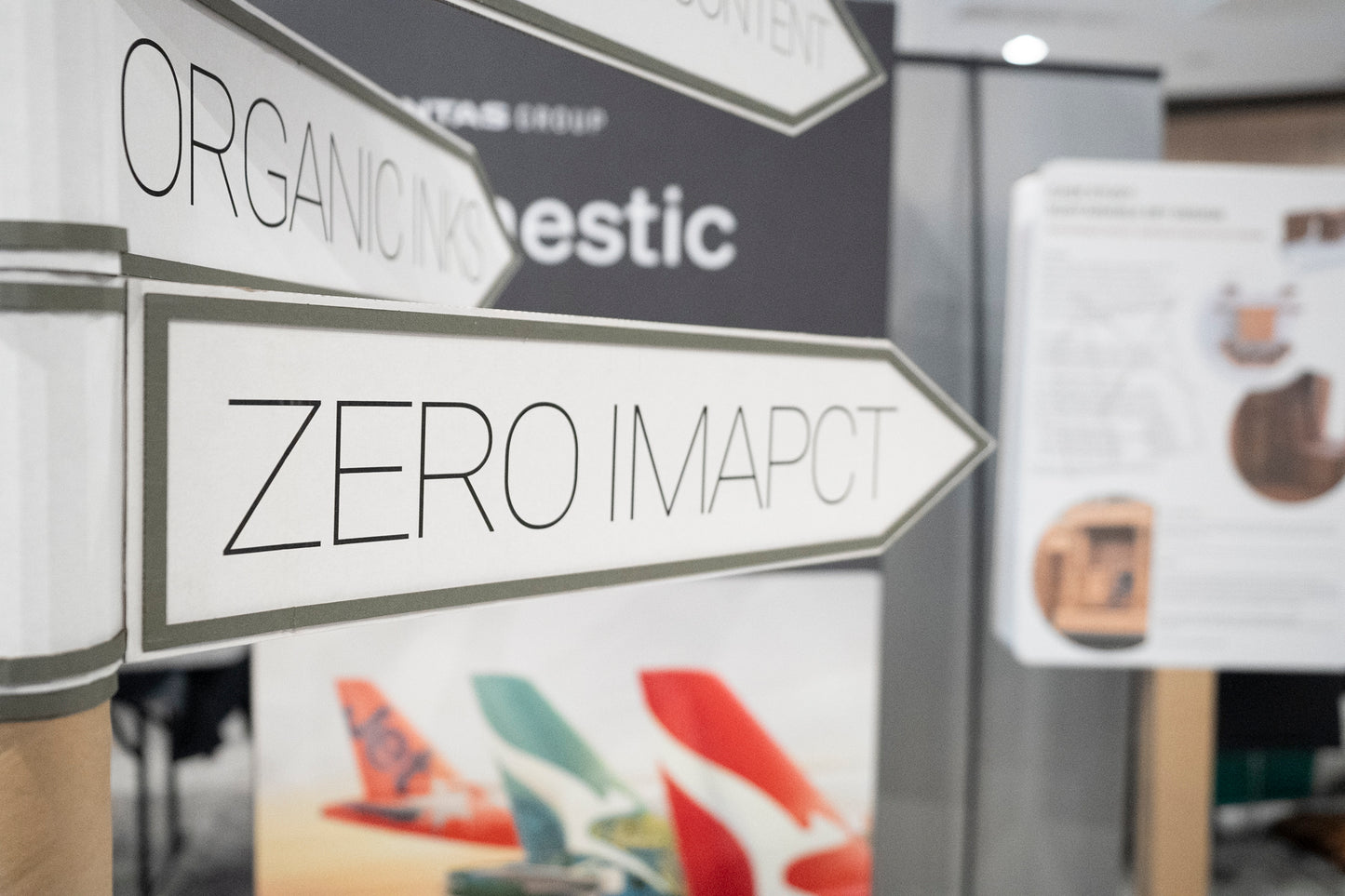
A cardboard directional signpost is a playful way to guide people through a space while also becoming part of the visual environment.
This design takes inspiration from traditional street signs. A tall cylindrical cardboard pole supports multiple arrow shaped signs pointing in different directions. Each arrow can feature a location, message, brand name or instruction.
They work well in exhibitions, conferences, trade shows and events where visitors need visual guidance but organisers also want something memorable and on brand. Because the signs sit at eye level and can point in different directions, they naturally draw attention and help people orient themselves within a space.
The base is weighted and stable, which means the structure can stand freely in open areas like exhibition halls, foyers or event entrances. Heights can be customised depending on the space, and the number of directional arrows can be adjusted depending on how many destinations or messages need to be displayed.
How the Cardboard Signpost Works
Structural design
The signpost is built around a cylindrical cardboard pole which acts as the main structural element. Directional arrows slide onto or attach around the pole at different heights.
The pole connects to a weighted cardboard base made from stacked layers that create stability without adding unnecessary bulk.
The result is a structure that is surprisingly sturdy while still being lightweight enough to transport and assemble easily.
Directional arrows
Each arrow shaped sign can be mounted around the pole and rotated to point in the required direction. This makes the design flexible for real event environments where traffic flow and entrances often change during planning.
Arrows can be evenly spaced or clustered depending on how many directions or messages you want to display.
Height options
The height of the signpost can be adjusted depending on the venue and how visible the structure needs to be.
For larger venues we often recommend slightly taller structures so the arrows remain visible above crowds.
Customisation and Branding
Directional signposts can be customised in several ways depending on the visual style of the event or installation.
Arrow shapes and layout
The arrows can be produced in different lengths and shapes.
Common variations include:
- classic pointed street sign arrows
- oversized directional panels
- graphic shaped arrows for themed events
- extra wide arrows for longer messages
Some projects include just three or four arrows. Others use many smaller arrows to create a playful multi direction signpost.
Graphics and colour finishes
The surfaces of the arrows provide a great canvas for graphics.
Common finishes include:
- natural kraft cardboard
- black cardboard
- printed CMYK graphics
- solid colour panel
The arrows can display place names, event zones, sponsor names, program stages or playful messages.
Sustainability
Cardboard signposts are often chosen by organisations looking to reduce the environmental footprint of their events.
The structures are built from responsibly sourced cardboard which can be recycled through standard paper recycling streams after use.
Because the material is lightweight, transport and freight requirements are also reduced compared with heavier materials like timber or metal.
Many clients also reuse the signposts across multiple events. Directional arrows can be swapped out or reprinted while the base and pole remain the same.
This approach supports more circular event design where structures are reused, repurposed or recycled instead of being thrown away after a single use.
Businesses are increasingly expected to consider their environmental and social impact. Sustainable exhibition design helps organisations demonstrate that events can still be creative and visually engaging while also reducing waste.
This approach aligns with a broader shift toward more responsible production and a regenerative business culture where materials and resources are used thoughtfully.
Ideal Applications
Directional signposts work well anywhere people need guidance while also contributing to the atmosphere of the space.
Common uses include:
Trade shows and conferences
Helping visitors navigate exhibition halls, session rooms or networking areas.
Brand activations
Pointing visitors toward experiences, photo areas or product demonstrations.
Exhibitions and museums
Directing people between gallery sections while becoming part of the visual storytelling.
Retail and pop up events
Highlighting zones like checkouts, product areas or workshops.
Festivals and community events
Showing directions to stages, food areas, restrooms or information points.
Theatre and immersive experiences
Creating playful scenic elements that feel like part of the set design.
Frequently Asked Questions
How strong is the structure?
The signpost is designed for indoor event environments. The cylindrical pole and layered base provide stability, and the structure can comfortably support multiple directional arrows.
Can the arrows be changed between events?
Yes. Many clients reuse the base and pole while swapping out arrows with updated graphics or messages.
Can it be printed with our branding?
Absolutely. Arrows can be fully printed with graphics, colours, logos or text depending on the visual style of the event.
Can it be shipped interstate?
Yes. The signpost is designed to be lightweight and flat pack friendly where possible, which helps reduce freight costs and makes interstate transport easier.
How many arrows can the signpost hold?
This depends on the height of the pole and the spacing required. Smaller builds might use three or four arrows, while larger versions can include many more.
How long does it take to produce?
Lead time varies depending on the level of customisation, printing and quantity. For most event builds we recommend allowing a few weeks for design, production and logistics.
Can it be used outdoors?
These structures are primarily designed for indoor environments like exhibition halls and event venues. Temporary outdoor use can sometimes be possible in calm weather conditions, but it depends on the location and duration of the event.