


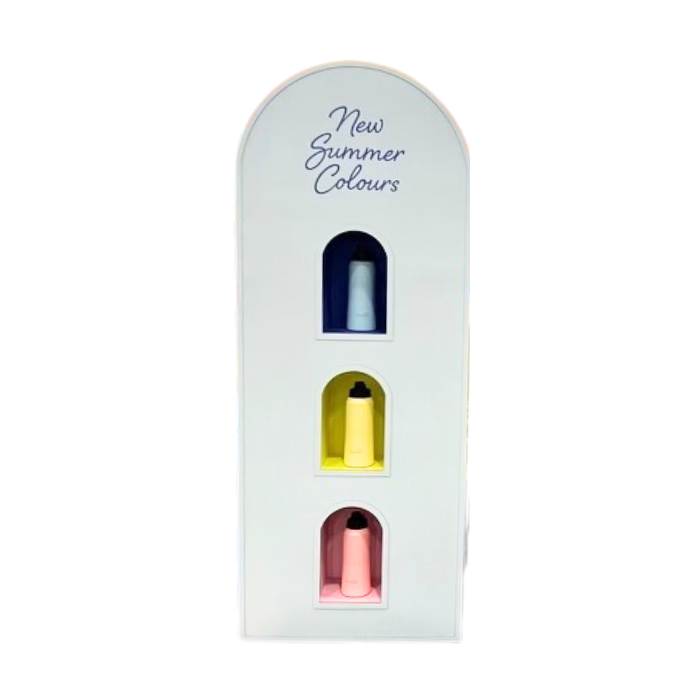
A cardboard backdrop arch is a sculptural feature designed to frame a moment.
It creates a strong visual anchor for a space without needing the footprint of a full stage set or installation. These arches are commonly used for photo opportunities, brand moments, exhibition features, stage backdrops and decorative installations.
Unlike a walkthrough arch, this structure is usually positioned against a wall or within a defined area. It works more like a backdrop or visual feature rather than something people walk through.
Many clients use them as:
- branded photo backdrops
- product launch features
- exhibition display elements
- stage backdrops
- decorative installations at events
Because the structure is made from cardboard, the shape and surface can be heavily customised. Some designs are clean and minimal with simple graphics. Others become sculptural installations with layered shapes, embossing or dimensional elements.
A typical size is around 2.5 metres tall and 3 metres wide, although this varies depending on the space and how the structure will be used.
How the Backdrop Arch Works
The structure is designed as a lightweight freestanding build that assembles on site.
Individual cardboard components are precision cut and designed to slot together into a stable form. This allows the structure to be transported efficiently and installed quickly at the venue.
Structural Design
The internal structure provides stability while keeping the build relatively lightweight. Cardboard performs surprisingly well for temporary installations because of its strength-to-weight ratio.
Once assembled, the arch behaves much like a scenic set piece.
Open Arch or Solid Arch
There are two common design approaches.
Open arch
A cut-out opening creates a framing element for people or products. This works well for photo moments or stage backdrops.
Solid arch
The arch shape acts more like a curved wall or backdrop. This version is often used for printed graphics or sculptural surfaces.
Both approaches can be customised depending on the design concept.
Customisation and Branding
This design is extremely flexible and can be adapted to suit almost any campaign, exhibition or event concept.
Printed Graphics
The entire surface can be printed with artwork, brand colours, campaign visuals or patterns. This is one of the most common approaches for trade shows and brand activations.
Logos and Lettering
Logos can be printed, cut out, or built as raised elements. Dimensional lettering can also be layered onto the arch surface.
Embossing and Texture
Embossed patterns can be pressed into the cardboard surface to create texture and shadow. This is a simple way to add visual interest without adding significant weight.
Sculptural Elements
Additional shapes or dimensional elements can be integrated into the arch design. These might include:
- brand icons
- abstract shapes
- layered forms
- product silhouettes
This approach turns the structure into more of a sculptural installation.
Size and Proportions
A typical size might be:
-
Height: around 2.5 metres
-
Width: around 3 metres
However the dimensions are flexible. Larger installations can be designed depending on venue ceilings and floor space.
Indoor Use and Weather Considerations
These arches are primarily designed for indoor environments such as exhibition halls, theatres and event venues.
Indoor Events
Indoor spaces are ideal because the structure remains protected from weather and humidity. Most trade shows, conferences and brand activations fall into this category.
Outdoor Events
Outdoor use can sometimes be possible, but it is assessed case by case.
Cardboard structures can be affected by:
- rain
- high humidity
- strong wind
- extended exposure to moisture
Because of this, the finish and longevity cannot be guaranteed in outdoor environments unless the conditions are carefully managed.
If an outdoor installation is required, we usually discuss the event duration, weather exposure and protective strategies before confirming the design.
Sustainability
Cardboard is one of the most practical materials for temporary installations.
It offers strength, flexibility and lightweight transport while remaining widely recyclable.
Recyclable Materials
Most of our structures are built from responsibly sourced cardboard that can be recycled through standard paper recycling streams at the end of its life.
Lower Impact Production
Compared with traditional scenic materials like timber, plastics or composite boards, cardboard generally requires less energy to process and produces less waste during fabrication.
Efficient Transport
Cardboard structures can often be flat packed, which reduces shipping volume and transport emissions.
Supporting Lower-Waste Events
The events and exhibition industry is increasingly looking for ways to reduce waste and environmental impact.
Choosing reusable or recyclable installation materials is one practical way organisers can move toward more responsible production. Businesses that consider their environmental and social impact are part of a broader shift toward a more regenerative economic system that benefits people, communities and the planet
Ideal Applications
Backdrop arches work well anywhere a strong visual focal point is needed.
Common uses include:
Trade Shows
Create a recognisable branded backdrop for exhibition stands or product launches.
Brand Activations
Provide a photo moment or campaign feature within an activation space.
Exhibitions
Frame interpretive displays, artwork or storytelling zones within galleries and museums.
Theatre and Stage Design
Used as scenic elements for performances, festivals or live events.
Retail and Pop Ups
Add sculptural visual interest within retail displays or short-term installations.
Photo Moments
Create a branded background for event photography and social media sharing.
Frequently Asked Questions
How strong is a cardboard backdrop arch?
Cardboard structures are surprisingly strong when engineered correctly. The layered structure and internal supports provide stability while keeping the overall build lightweight.
They are well suited to temporary installations, exhibitions and events.
Can the arch be reused?
In many cases yes.
If the structure is carefully dismantled and stored, it can often be reused for future events or installations. Some clients design their arches specifically for repeat use across multiple exhibitions.
Can it be shipped interstate?
Yes.
Most structures are designed to pack flat where possible, which makes shipping easier and more cost effective. We regularly send installations across Australia.
How long does it take to produce?
Production timelines vary depending on the complexity of the design, printing and sculptural elements.
As a general guide, most projects require several weeks of lead time from design approval to fabrication.
Can the shape be customised?
Absolutely.
While the basic form is an arch, the proportions, curves and detailing can all be customised. Many projects develop unique silhouettes that align with a brand campaign or exhibition theme.
Can graphics be printed directly onto the arch?
Yes.
Direct printing is one of the most common approaches. This allows full colour graphics, brand artwork or patterns to be integrated directly into the structure.
Can sculptural or dimensional elements be added?
Yes.
Embossing, layered panels and dimensional shapes can all be incorporated into the design. These elements help turn the arch into a more sculptural installation rather than just a flat backdrop.