


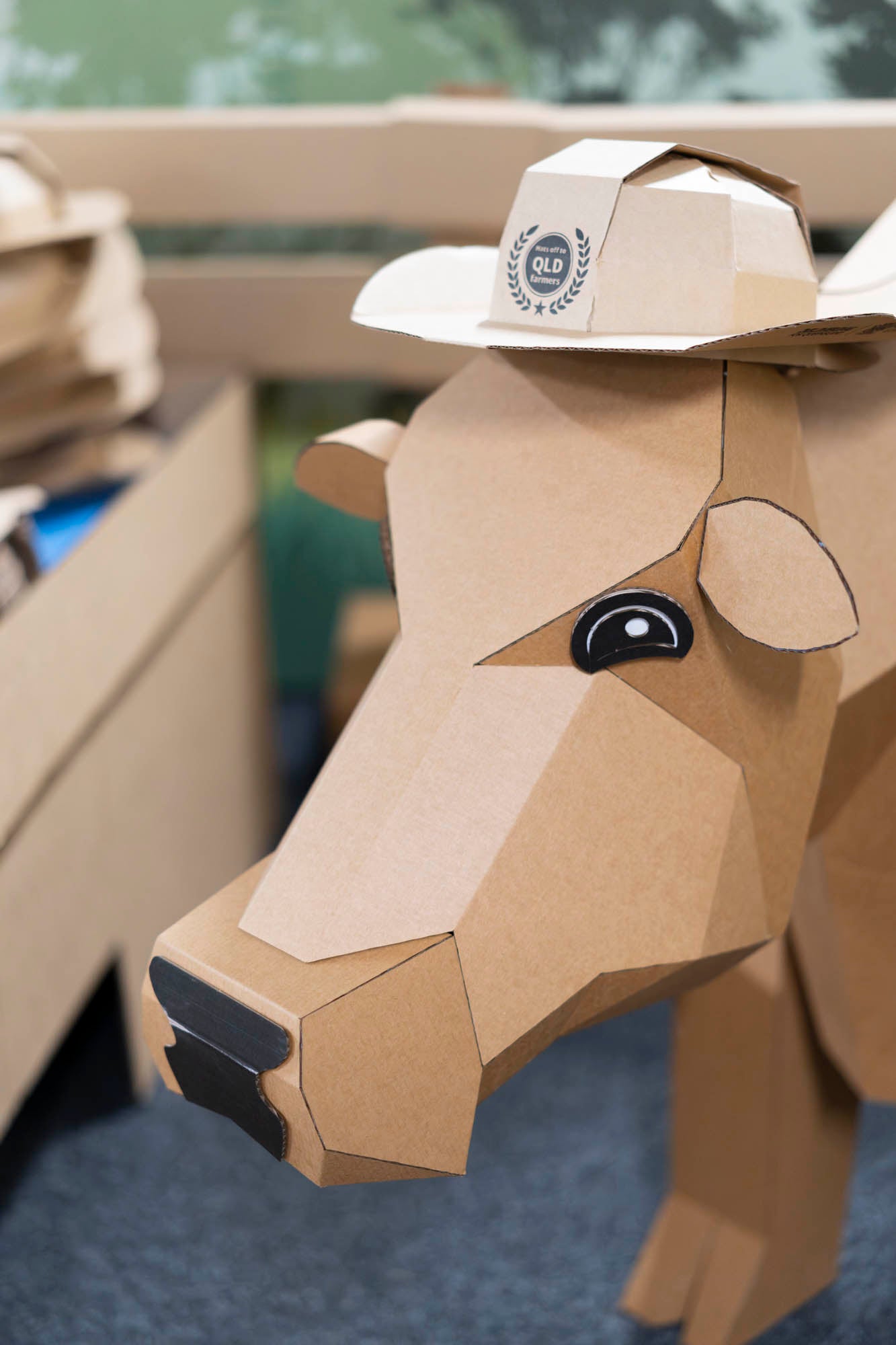
A cardboard cow sculpture is one of those pieces that instantly draws attention. It’s familiar, a bit playful, and surprisingly impactful when scaled up into a full installation.
We design these as large-format cardboard sculptures that can sit as a centrepiece, be part of a themed environment, or work as a photo moment within an activation. You’ll often see them used in agricultural shows, food and beverage activations, retail displays, exhibitions, or anything with a rural, sustainability, or storytelling angle.
They can be realistic, stylised, oversized, or abstract depending on the direction of the project. Some end up as standalone sculptures, others become part of a full set build.
How the Cardboard Cow Works
These sculptures are built using layered cardboard construction, designed to create strength without adding unnecessary weight.
Internally, the structure is made up of interlocking components that slot together. This allows the sculpture to hold its shape while still being relatively lightweight and easier to transport compared to traditional materials.
Depending on the scale and environment, the cow can be:
- freestanding with internal structural support
- fixed to a base for stability in high-traffic areas
- designed in sections for transport and assembly onsite
For larger builds, we often break the sculpture into multiple parts that are assembled during bump-in. This keeps logistics manageable, especially for interstate projects or tight access venues.
Customisation and Branding Options
Surface Finish and Graphics
The outer layer is where the personality really comes through.
- full printed graphics for branding or campaigns
- painted finishes in custom colours
- raw cardboard for a more natural, tactile look
- layered detailing to add depth, texture, or pattern
Logos, messaging, or campaign visuals can be integrated directly into the surface rather than feeling like something added on afterwards.
Interactive Elements
Depending on the project, the sculpture can become more than just a visual piece.
- photo moments with seating or platforms nearby
- integration into larger sets, walls, or environments
Sustainability
Cardboard works really well for sculptural builds because it gives you form and scale without the environmental cost of heavier materials.
We use responsibly sourced cardboard that can be recycled at end of life, and wherever possible we design pieces so they can be reused across multiple events or adapted for future installations.
Because the material is lightweight, it also reduces transport impact, especially for larger builds that would otherwise require heavy freight.
As a studio, we’re part of a broader shift toward more responsible production in events and exhibitions. Businesses are increasingly expected to consider their environmental and social impact, and working with materials like cardboard is one way to reduce waste while still creating something visually strong and engaging.
Ideal Applications
A cardboard cow sculpture works well anywhere you want something recognisable, a bit unexpected, and highly visual.
- agricultural shows and rural events
- food and beverage activations
- brand campaigns with a sustainability angle
- retail displays and window installations
- exhibitions and museum environments
- themed event spaces or stage design
- community events and educational programs
- photo moments and interactive installations
It can be the hero piece or part of a much larger environment.
FAQs
Can it be reused?
Yes. Many of these are designed to be reused across multiple events or stored for future activations. We can also design them so parts can be refreshed or re-skinned.
Can you ship it interstate?
Yes. We regularly design sculptures in sections so they can be flat packed or transported efficiently, then assembled onsite.
How long does it take to build?
Typically 4–6 weeks depending on size, detailing, and current production schedules. Larger or more complex builds may require additional time.
Can we customise the shape or pose?
Definitely. The cow can be standing, sitting, abstracted, oversized, or completely reinterpreted to suit the creative direction.
Can it include branding or campaign messaging?
Yes. Graphics, colours, and logos can be fully integrated into the design so it feels cohesive rather than applied at the end.