


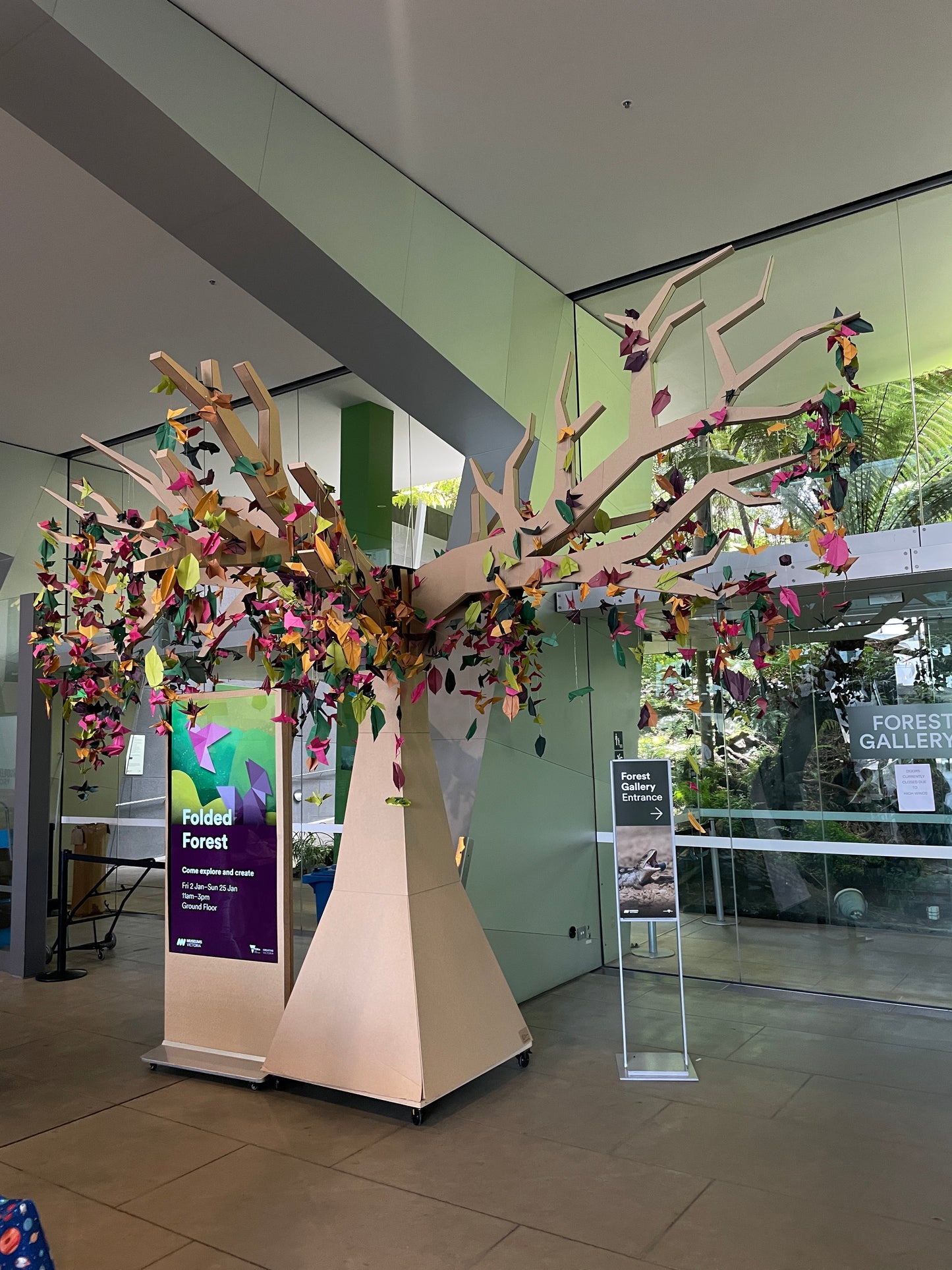
A giant cardboard oak tree sculpture is an effective way to bring height, atmosphere and detail into a space without the weight, cost and waste of more traditional scenic materials.
These sculptures work well for exhibitions, museums, theatre sets, retail displays, school activations, brand experiences and immersive event environments. Whether you need a single statement tree or a full cardboard forest, the structure can be adapted to suit the scale and style of the project.
One of the most useful features of this design is that multiple trees can be built from the same core shape system while still looking different from each other. The branches can be installed in different sequences and positions, which creates variation in the silhouette and canopy shape without needing to completely redesign every tree.
How the Cardboard Oak Tree Sculpture Works
The tree is built from a combination of trunk sections, branch components and canopy pieces that slot and assemble together into a freestanding structure.
For smaller projects, the tree may be built as a more compact single piece. For larger installations, it is usually designed in sections so it can be packed flat, transported more easily and assembled onsite.
Where multiple trees are required, the same branch shapes can be reused across the project and installed in different ways. By changing the branch arrangement and sequence, each tree can feel unique while still keeping the production process efficient and consistent.
This works especially well for projects creating a forest effect, a walkway, a themed backdrop or a more immersive environment where repeated structures are needed but clients still want the overall space to feel natural and varied.
Customisation, Sizes and Finishes
Tree Height and Shape
The overall size of the tree can be adapted depending on the venue, transport requirements and how the sculpture will be used.
Smaller trees may be designed for tabletop displays or lower ceiling spaces, while larger builds can become full walk-through scenic pieces for exhibitions and events.
The trunk width, canopy spread and branch detail can all be customised to suit the final look.
Branch Layouts
One of the strengths of this design is the ability to create multiple trees that feel related without feeling identical.
Using the same set of branch components, we can alter the arrangement, spacing and installation order to create different silhouettes and canopy shapes. This is particularly useful when several trees are being installed together.
Printed Graphics and Scenic Finishes
The tree can be finished in a range of ways depending on the visual style of the project.
Options can include:
- raw cardboard for a natural or workshop aesthetic
- printed bark textures
- coloured foliage or canopy layers
- branded graphics
- scenic painting or illustration
- attached signage or interactive elements
- integrated shelving, seating or display features
Approximate Pricing
Pricing depends on the scale, finish, number of trees and level of detail involved.
As a rough guide:
- Small decorative tree sculptures generally start from around $800 to $1,500 + GST
- Mid-sized freestanding trees often range from $2,000 to $5,000 + GST
- Large hero trees or multi-tree environments can range from $5,000 to $15,000+ GST depending on height, complexity and installation requirements
Projects with multiple trees can often be made more cost effective because the same core shapes and branch systems can be reused across the set.
Sustainability
Cardboard oak tree sculptures are a lightweight and lower-impact alternative to timber, MDF and other traditional scenic materials.
The use of repeated branch components across multiple trees can also help reduce waste during production, as the same shapes can be reused in different ways across the project.
The materials used are recyclable, responsibly sourced and easier to transport due to their lighter weight. Depending on the design, sections may also be reused, re-skinned or repurposed for future events.
For organisations looking to reduce event waste, improve sustainability outcomes and create immersive spaces with less environmental impact, cardboard is a very practical material choice.
Businesses are increasingly expected to consider their environmental and social impact, and projects like this can help contribute to broader sustainability goals while still creating something visually impressive.
Ideal Applications for Giant Cardboard Tree Sculptures
These sculptures work particularly well for:
- museum and gallery exhibitions
- immersive event environments
- theatre and stage sets
- themed retail displays
- brand activations
- school and educational installations
- seasonal events
- photo opportunities
- exhibition entrances
- children's spaces and storytelling zones
They are especially effective in spaces that need height, visual impact and atmosphere without introducing heavy materials or difficult logistics.
FAQs
Can multiple trees be made to look different?
Yes. The branch components can be arranged in different sequences and positions so multiple trees can be built from the same core system while still looking unique.
How tall can the tree be?
The height depends on the venue, ceiling clearance and transport requirements. Trees can range from small decorative pieces through to large-scale scenic structures several metres tall.
Can the tree be shipped interstate?
Yes. Larger trees are usually designed in sections so they can be packed and transported more easily.
Can the sculpture be reused?
In many cases, yes. Reuse depends on the finish, level of wear and how the sculpture has been designed. Some projects are designed for a single event, while others are intended for repeat use.
Can the tree include branding or signage?
Yes. Branding, printed graphics, logos, signage panels and interactive elements can all be incorporated into the design.
Is cardboard strong enough for something this large?
Yes. The strength comes from the internal structure, layering and the way the components lock together. Large cardboard installations are engineered to suit the environment they will be used in.
How long does production take?
Smaller tree sculptures can often be produced relatively quickly, while larger scenic environments or multi-tree installations generally require more design, printing and assembly time. Timing will depend on the scale and complexity of the project. Please allow minimum 4 weeks