


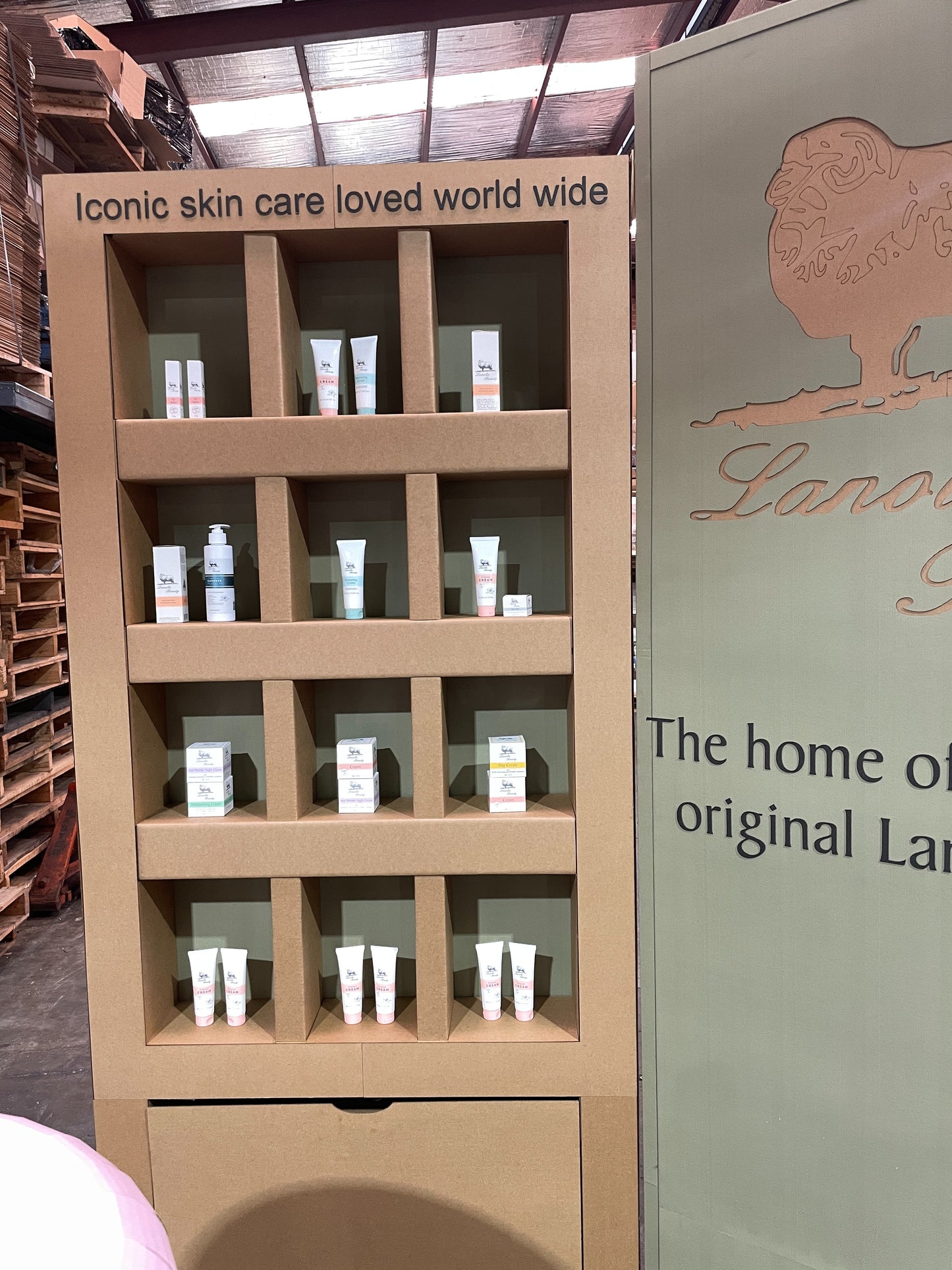
This cardboard product display shelf works well in exhibitions, retail activations, trade shows, and pop ups.
Because we build these for specific projects, the shelf can be adapted to suit anything from small packaged goods through to heavier or more awkward items.
How It Works
The shelf is built from cardboard, engineered to handle weight while staying lightweight enough to move, transport, and install without heavy equipment.
Each unit is designed based on what it needs to hold. That affects the thickness, internal structure, and spacing of shelves. Some builds are simple tiered shelving, others are more sculptural with angled or stepped forms depending on how products should be displayed.
Most shelves are designed in sections so they can be transported easily and assembled on site. Once in place, they feel solid and stable, with internal reinforcement where needed.
If the shelf is part of a larger installation, it can integrate directly into walls, plinths, or display systems so everything feels connected.
Customisation and Branding
Size and Structure
There is no standard size for these.
We usually design them based on:
- product size and weight
- how many items need to be displayed
- available footprint and height restrictions
- how close people will get to the display
Shelves can be low and wide for browsing, or tall and narrow for tighter spaces. Depth and spacing are adjusted so products don’t feel cramped or lost.
Branding and Visual Finish
There are a few ways to approach the look:
- direct print for full colour graphics
- embossed or layered logos for a more tactile finish
- natural cardboard with minimal branding for a softer, material-led look
Functional Additions
Depending on the project, we can integrate:
- product signage or pricing panels
- built-in lighting considerations
- hidden storage sections
- interactive elements for sampling or engagement
The goal is to make the shelf work as part of the experience, not just a place to stack products.
Sustainability
These shelves are made from responsibly sourced cardboard and designed with end-of-life in mind.
The material is fully recyclable, and in many cases the structure can be reused across multiple events or activations. Components can be re-skinned, rebranded, or adapted rather than rebuilt from scratch.
Because cardboard is lightweight, transport has a lower impact compared to heavier materials. It also means faster installs and fewer handling requirements on site.
More broadly, projects like this support a shift towards more considered event production. There’s a growing expectation for businesses to think about how things are made, used, and disposed of, and cardboard offers a practical way to reduce waste without limiting creativity.
As part of a wider movement towards more responsible business practices, many companies are working towards higher standards of environmental and social impact, contributing to a more regenerative economy over time
Ideal Applications
Trade Shows and Exhibitions
Clear product displays that are easy to navigate in busy environments.
Retail Activations and Pop Ups
Short-term retail spaces where the fit-out needs to feel cohesive and brand-aligned.
Product Launches
Hero displays that draw attention to a specific product or range.
Workshops and Sampling Stations
Shelving that supports interaction, demos, or hands-on experiences.
Gallery and Installation Spaces
When the display itself becomes part of the visual language of the space.
FAQs
How strong is the shelving?
Stronger than most people expect. We design each unit based on the weight of the products it needs to hold. Internal layering and structure do the heavy lifting.
Can it be reused?
Yes. Many shelves are designed to be packed down, stored, and used again. They can also be rebranded or slightly modified for future events.
Can it be shipped interstate?
Yes. We design for transport from the start, so components can be packed efficiently and assembled on site.
Can we customise the shape?
Absolutely. Straight shelving is common, but we also build curved, stepped, or more sculptural forms depending on the concept.
Can it be printed?
Yes. Full colour print, simple branding, or a more minimal material-led finish are all options.
How long does it take to produce?
Timing depends on complexity, but generally a few weeks from design sign-off to completion. If you’re working to a fixed event date, it’s best to start the conversation early.
What kind of products can it hold?
Most things. From lightweight packaging through to heavier items, as long as we know what’s going on it, we can design the structure to suit.