

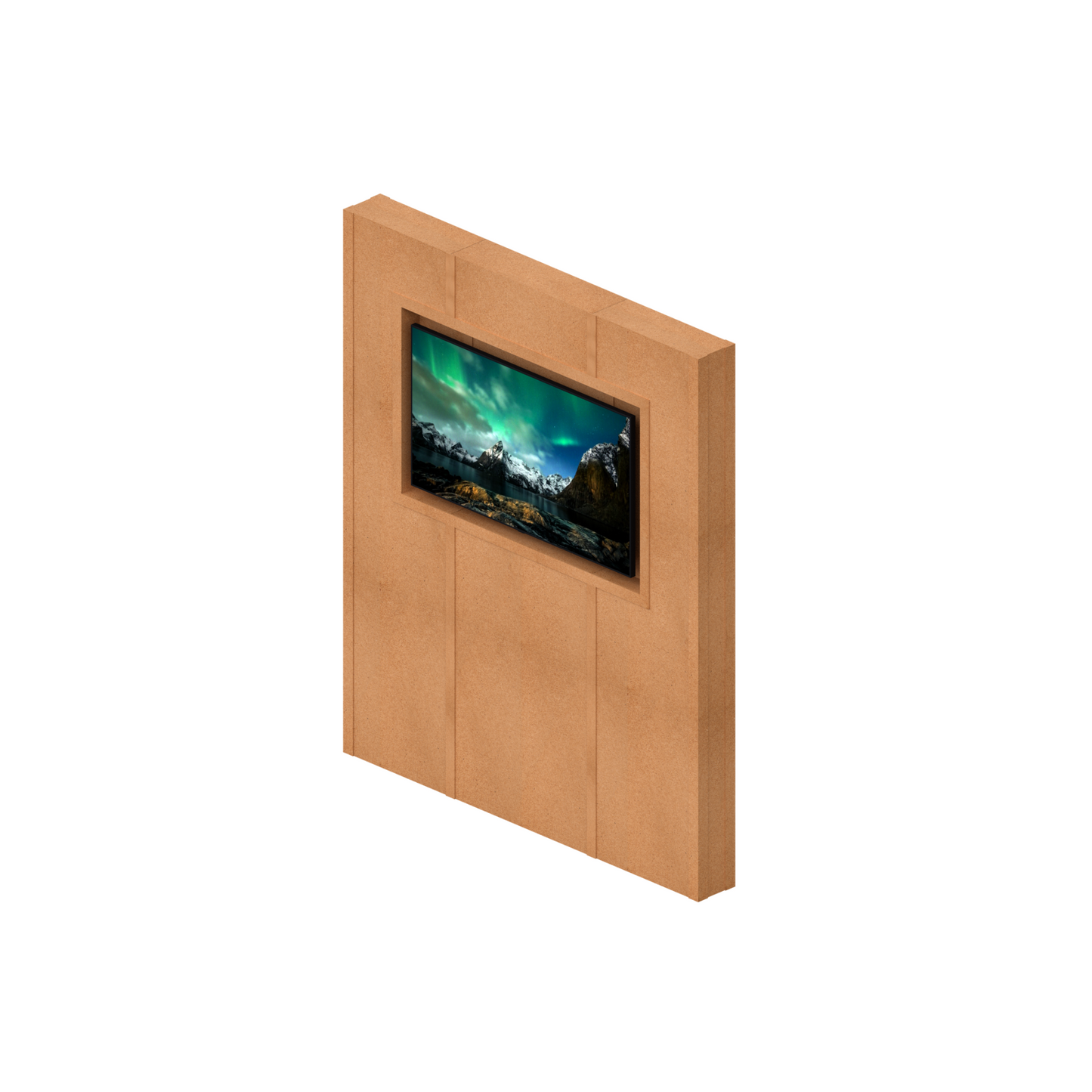
The Cardboard TV Display Wall combines structural presence with integrated digital media.
It’s designed for exhibitions, trade shows and brand activations where a screen needs to sit naturally within the environment rather than looking like an added piece of AV equipment. Instead of placing a television on a stand or truss system, the screen sits inside the wall structure itself.
This creates a cleaner presentation surface that feels more like part of the exhibition design. It also reduces visual clutter across the booth and allows graphics, messaging and video content to work together in one cohesive structure.
The system is built using our 200mm thick structural cardboard wall panels, which provide the depth needed to safely house a screen while keeping the overall structure lightweight and easy to transport.
It works particularly well in trade show booths, museum displays, product demonstrations and presentation environments where moving content helps tell the story.
How the TV Display Wall Works
Structural wall system
The TV Display Wall is built using our modular structural wall panels.
Each unit forms part of a continuous wall system that can be expanded depending on the size of the display area. The structure provides enough internal depth to house a screen while maintaining a clean external finish.
Wall dimensions
Typical panel specifications:
-
Height: 2350mm
-
Width: 1960mm
-
Thickness: 200mm
-
Approximate weight: 5kg per panel (excluding TV)
Multiple panels can be joined together to create longer walls.
Integrated TV structure
Our standard TV is a 55 inch TV
The 200mm wall depth allows a screen to sit inside the wall rather than attaching to the front surface.
This creates a built-in presentation area that feels more intentional within an exhibition environment.
TVs can be supplied by us or provided by the client. Integration is planned during the design stage so cable routing and screen placement are resolved before production.
Stability and support
Because the wall contains a screen, appropriate support is required.
Common options include:
- Side support feet
- Rear support structures
- External weighting if required by venue rules
The exact support approach is confirmed once the screen size, venue and layout are known.
Customisation and Branding
One of the strengths of the TV Display Wall is how easily it can become part of the broader visual environment.
The structure can be fully skinned with custom graphics so the screen sits within a branded surface rather than looking like standalone equipment.
Graphics and artwork
Graphics can be applied to one or both sides of the wall.
Clients can:
-
Work with our in-house graphic designer
-
Supply artwork using our dielines
-
Choose solid colour finishes
Graphics are normally applied per panel unit, so small seams will remain visible where panels connect.
Framing the screen
If visual continuity across multiple panels is important, embossing and dimensional detailing can be incorporated into the wall surface.
These techniques can:
-
Frame the screen visually
-
Add depth and texture
-
Highlight logos or brand features
-
Reduce the visual impact of panel joins
This creates a more layered and considered finish.
Sustainability and Responsible Materials
Cardboard display structures are increasingly being used in exhibition design because they combine strong visual impact with lower material impact.
The TV Display Wall follows the same principles used across our broader cardboard installation systems.
Responsible material sourcing
The structures are produced using cardboard made with high recycled content and responsibly sourced fibre.
Designed for reuse
Many organisations use the same wall structure across multiple events.
Printed skins can be replaced between campaigns, allowing branding to change while keeping the structural components in use.
Efficient transport
Cardboard structures are lightweight compared with traditional exhibition builds. This reduces freight weight and simplifies installation.
End of life recycling
At the end of their life cycle, the materials can be recycled through standard cardboard recycling streams.
Businesses are increasingly expected to consider their environmental and social impact when planning events and activations. Using reusable cardboard structures can help reduce waste while still delivering strong visual results.
Companies that pursue more responsible production models are also contributing to a broader shift toward a regenerative economy that values people, communities and the environment alongside commercial outcomes.
Ideal Applications for a TV Display Wall
The integrated screen system works well in spaces where digital content plays an important role in storytelling or product demonstration.
Common uses include:
Trade show booths
The wall becomes a focal point where video content, brand messaging and product demonstrations can run throughout the event.
Brand activations
Screens can be used to display campaign content, social media feeds or product explainers within a branded structure.
Corporate presentations
The wall can function as a presentation backdrop for talks, workshops or panel discussions.
Museum and exhibition displays
Digital storytelling elements can sit alongside physical displays without introducing traditional AV stands.
Retail activations
Short-term pop-ups often benefit from integrated media that helps explain products or share brand stories.
Frequently Asked Questions
Can a TV safely sit inside a cardboard wall?
Yes. The wall depth and structure are designed to accommodate integrated screens when paired with the appropriate support feet or rear supports.
What size TV can be used?
TV size is confirmed during the design stage. The screen must fit comfortably within the wall structure while maintaining safe support and clean framing.
Do you supply the TV?
We can supply the screen if needed, or clients can provide their own. Integration planning happens before production so mounting and cable routing are resolved early.
Can the wall be reused for multiple events?
Yes. Many clients reuse the structural wall panels and simply update the printed skins for different campaigns or events.
Can it be shipped interstate?
Yes. The wall panels are lightweight and designed to transport efficiently. They can be shipped across Australia or internationally depending on the project.
How long does it take to produce?
Production time depends on the complexity of the graphics and the number of panels required. Most projects are produced within a few weeks once design and screen details are confirmed.